


– The development of the mining sector
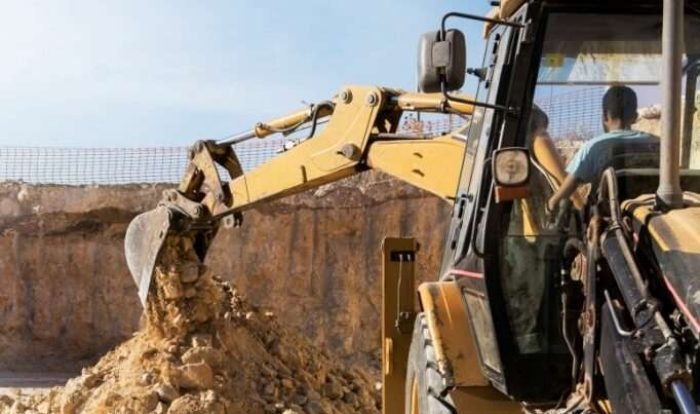
The mining sector represents a pillar of Madagascar's emergence. With actions combined with the sectoral objectives of the General State Policy, the Government is taking on a major challenge to ensure that this sector can renew its contribution of tangible benefits at all levels, both nationally and internationally, for industrial development.
In the past, Madagascar was essentially a country of artisanal mining, an activity almost entirely informal but far from marginal for the country's economy. It is known worldwide for its precious and semi-precious stones: sapphire, ruby, aquamarine, tourmaline, topaz, amethyst, emerald, etc. At the end of the 1990s, the rushes on sapphire and ruby, symbolized by the sudden appearance of new mining towns in Ilakaka or Sakaraha, made the country one of the world's largest producers of these colored gems. Mining investments represented more than 80% of FDI in 2009 and 2010, or $1.08 and $0.65 billion respectively.
The recent launch of the Qit Madagascar Minerals (QMM) and Ambatovy megaprojects has initiated a shift in scale by increasing its strategic importance. The arrival of these two industrial players represented an investment level in the order of several billion dollars. Madagascar has experienced major development with the launch of two world-class industrial projects.
First of all, the exploitation of ilmenite (with a content of 60% in titanium dioxide, giving it a superior quality) and zirsill (mixture of zircon and ilmenite) in Tolagnaro (Fort Dauphin), launched in 2009 by the company QMM, owned 80% by Rio Tinto and 20% by the Malagasy State, the result of a total investment of 1.1 billion US dollars.
Then, the exploitation of nickel and cobalt as well as ammonium sulfate, a by-product of refining, launched at the end of 2012 by the Ambatovy Project. In Moramanga in the East, Ambatovy operates one of the largest lateritic nickel mines in the world. A total investment estimated at $8 billion (mine, pipeline and refinery near the port of Tamatave). The joint venture is owned by three shareholders: Sherritt International Corporation, Project Promoter, Sumitomo Corporation, and Korea Resources Corporation. In March 2020, the Canadian mining company announced that it was leaving the Ambatovy joint venture. Sherritt decided to transfer its 12% stake in the nickel plant to its two partners, thus reducing Sumitomo Corporation's shareholding to 54,18% and Kores' to 45,82%. In 2019, the Ambatovy project produced 33,733 tonnes of refined nickel and 2,900 tonnes of refined cobalt. 3,000 tonnes of nickel are to be produced during the first quarter of 2021, this is the objective due to the consequences of the Covid-19 crisis. Note that in full operational phase, production will amount to 60,000 tonnes of nickel, 5,600 tonnes of refined cobalt and 210,000 tonnes of ammonium sulfate (fertilizer).
Some deposits could give rise to development in the medium term, such as ilmenite from the East Coast and Tulear, coal from Sakoa, gold from Betsiaka and Maevatanana, iron from Soalala, bauxite from Manantenina and rare earths from Ampasindava and Fotadrevo.
For the Toliara mineral sands project, the mining company Base Ressources is not expected to make a final investment decision until September 2021. Discussions have been ongoing since the suspension of activities in Toliara in November 2019. If the final investment decision is successful, construction of the Toliara project is expected to take 26 months, with the first mineral shipments beginning in late 2023.
On the tax side, the State is considering setting variable rates for mining royalties based on the profitability of the products mined, instead of the current single rate of 2%, which applies regardless of the mineral mined.